Clinical
What happens when your doctor has an AI teammate?
Google DeepMind's AI co-clinician research, the rise of triadic care, and what it actually looks like at Meliora.

Graphic by Emmanuel Cecilio
Last week, Google DeepMind published research on something they're calling the "AI co-clinician" — an artificial intelligence system designed to work alongside physicians, not replace them. The study made headlines. And if you're a patient, you probably had one of two reactions: either excitement, or a quiet, unsettled feeling that medicine is about to get a lot less human.
I want to talk about both of those reactions. Because I think the truth is more interesting than either one.
The problem AI is actually trying to solve
The World Health Organization projects a global shortage of more than 10 million healthcare workers by 2030. That's not a technology problem — it's a capacity problem. There are not enough hours in a physician's day to give every patient the depth of attention they deserve.
Most people experience this as the 15-minute appointment. You wait weeks to get in. You get a fraction of the time you needed. You leave with some answers and a lot of unanswered questions. You go home and search the internet, which gives you either nothing useful or something terrifying.
That gap — between what a physician knows and what a patient can access between appointments — is what AI is being designed to fill.
Three in the room, not two
The DeepMind researchers use the phrase "triadic care." It describes a model where there are three participants in your healthcare instead of two: you, your physician, and an AI that works under your physician's authority.
Think of it less like a robot doctor and more like a very well-briefed medical assistant who has read every note, every protocol, and every piece of clinical guidance your physician has ever written — and is available to you at any hour.
The physician still makes every clinical decision. The AI handles the in-between: answering questions between appointments, helping you understand your lab results, reminding you why a specific supplement matters for your nervous system, flagging when something you're describing warrants a call.
That's the model. And it only works if the AI knows what your physician actually thinks — not what medicine in general says, but how your doctor approaches care.
Why generic AI falls short
Here's what I've learned from building Meli, Meliora's AI health assistant: the knowledge is everything.
Ask a general-purpose AI about your cortisol levels and you'll get a textbook answer about what "normal" looks like. Ask Meli the same question and you'll get an answer grounded in how I actually interpret cortisol — the difference between normal and optimal, what I look for in the pattern across a full panel, how cortisol interacts with progesterone and thyroid function in a patient navigating perimenopause.
That difference isn't small. It's the difference between an answer that's technically accurate and one that's actually useful for you, in the context of the Meliora Method.
The DeepMind research confirms this. Their AI performed comparably to primary care physicians in many areas — but physicians still outperformed AI significantly in identifying "red flags" and making nuanced clinical judgment calls. That finding doesn't concern me. It reinforces exactly how we've designed Meli: to extend my reach, not to replace my judgment.
What this looks like at Meliora
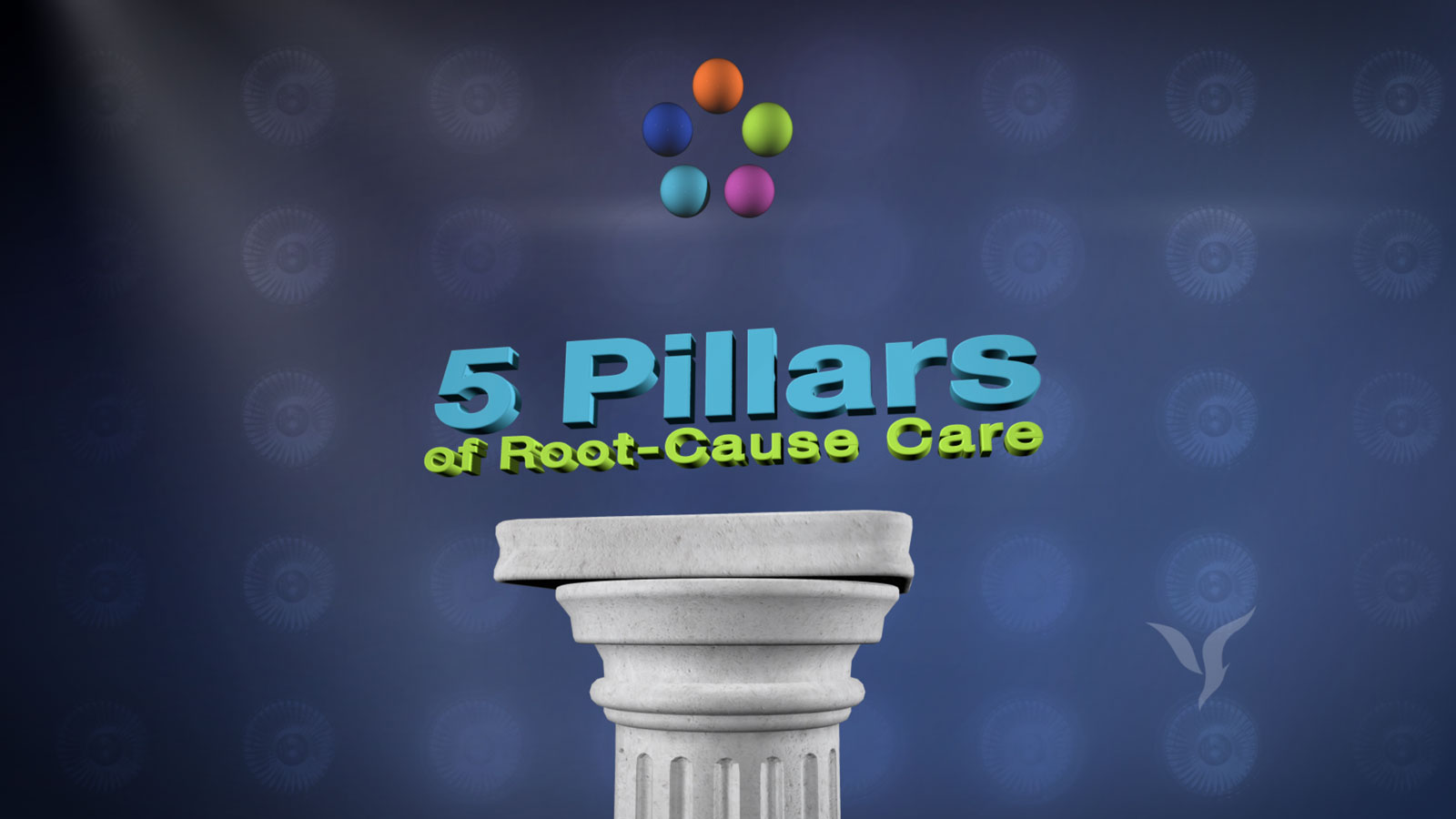
When a patient works with me, they're not just getting an appointment. They're getting access to a framework — the Meliora Method — that addresses hormone rebalancing, nutrient repletion, gut and detox optimization, stress and adrenal regulation, and metabolic and mitochondrial support. Five interconnected pillars, never treated separately.
That framework is what Meli is built on. Every answer Meli gives is grounded in my clinical protocols. Every question it flags is one I've identified as worth escalating. My neurology training means I've built in specific sensitivity to the signals that indicate the nervous system is under-resourced — because in my experience, that's one of the most commonly missed drivers of chronic symptoms.
Meli doesn't guess. It doesn't search the internet. It draws from a curated knowledge base that I've built, reviewed, and continue to refine.
The honest answer
Is AI in medicine perfect? No. The research says so plainly, and so do I.
But the question was never whether AI is perfect. The question is whether AI, in the hands of the right physician with the right clinical framework, can give patients more of what they need: more access, more education, more continuity between the moments they're in my office.
At Meliora, the answer is yes — deliberately, carefully, and always with me as the final authority.
If you've ever left a doctor's appointment with more questions than answers, that's the gap we're working on. Not with a robot. With a teammate.
Dr. Rowena Chua is the founder of Meliora Integrative Medicine in Evanston, IL and is triple board-certified in Neurology, Integrative Medicine, and Obesity Medicine. A longtime Evanston physician, she specializes in hormonal, metabolic, and neurological health.
Educational only. This article explains physiology; it is not medical advice, a diagnosis, or a treatment plan, and it cannot account for your own history, medications or results. For guidance specific to you, please speak with your physician.
Semper ad Meliora.
Always toward the pursuit of better.
Work with Meliora
Wondering what this looks like for you?
If something here resonated, we'd be glad to help you look at your own picture — your labs, your history, the whole system. That's the heart of how we practice.
Start hereMore from Meliora

Educational
Why I Don’t Test Cortisol — and What Stress Actually Does to Your Body
A woman came to see me who had already been told what was wrong with her. It was stress — told kindly, by a doctor who meant well, and then she was sent home. It is just stress is not a wrong answer. It is an unfinished one. Here is what a sustained load actually does to sleep, weight, digestion and hormones, and why I read what cortisol touches rather than cortisol itself.
Clinical
IV Nutrient Repletion: What It Can and Can’t Do
A patient asked me for the anti-aging drip she’d seen advertised. I asked her what she was actually tired from — and her ferritin turned out to be low. I say no to more IV requests than I say yes to, and that’s the same reason we offer them at all: an infusion is a medical decision, not an experience.
Practice
Why We Teach You Your Own Physiology
Most medicine hands you a conclusion and sends you home. We do the opposite — we teach you how your own body works, read as one connected system across five pillars, because a patient who understands her own physiology makes better decisions every day than any single appointment can. Here’s what that actually looks like.
Subscribe
Get future essays in your inbox.
Clinical perspectives from Dr. Chua and the Meliora team. No spam, no urgency, no nonsense.
Subscribe