
ClinicalEducational
Perimenopause can begin years before your period changes
Fatigue, brain fog, weight that won’t move, sleep that fell apart — and a doctor who says your labs are normal. Here’s why standard testing misses early perimenopause, and what “optimal, not normal” means for your hormones.

Graphic by Emmanuel Cecilio
She was 46, and her periods were still arriving more or less on schedule. That was the reason her doctor gave for why this could not be what she thought it was. “You’re too young, and you’re still cycling,” she was told. “Your labs are normal. It’s probably just stress.”
But she knew her own body. The sleep that used to come easily now broke apart at 3 a.m. The patience she had always had with her kids was gone by dinner. Her cycle was still there, but the week before it had turned into something she didn’t recognize — anxious, foggy, tearful, wired. And the scale was climbing no matter what she did.
She did not have a stress problem. She was in perimenopause. And she had been for a couple of years already.
Perimenopause is a transition, not a switch
The most common misunderstanding I correct in my office is the idea that menopause arrives one day, like a light turning off. Menopause is actually a single point — the day you have gone twelve months without a period. Everything leading up to it is perimenopause, and that stretch is long. For most women it lasts four to eight years, and it commonly begins in the early-to-mid forties. For some, it starts in the late thirties.
Which means a woman can be years into the hormonal transition while her periods are still regular and her standard labs still look unremarkable. She is not too young. She is right on time.
Why a single lab looks “normal”
Here is the part standard testing struggles with: in perimenopause, your hormones are not gliding smoothly downhill. They are swinging. Progesterone starts to fall first, often years before anything else, as cycles begin to skip ovulation. Estrogen becomes erratic — not simply low, but volatile, spiking higher than it ever did and then crashing, sometimes within the same month.
Now picture drawing a single tube of blood on a single morning and measuring one point on that moving curve. Depending on the day, you might catch a peak, a trough, or something in between — and any one of those can land inside the reference range. The lab calls it normal. What it has actually captured is one frame of a moving picture.
A single hormone level in perimenopause tells you where you were the morning of the draw. It does not tell you what your hormones are doing across the month — and the month is the problem.
This is also why a one-time FSH test, the marker often used to “check for menopause,” is unreliable during the transition. It rises, but it fluctuates too, so a normal result on a given day rules nothing out.
What is actually shifting
When I map a patient’s symptoms against what her hormones are doing, the story usually comes together quickly.
Progesterone is typically first to decline. Because progesterone is calming and sleep-supporting, its loss tends to show up as broken sleep, new anxiety, a shorter fuse, and heavier or less predictable cycles.
Estrogen turns erratic. Its swings drive the hot flashes and night sweats everyone expects — but also the symptoms women are rarely told to connect to hormones at all: brain fog, word-finding trouble, low mood, and new or worsening migraines. As a neurologist, this is the piece I watch most closely, because estrogen is deeply active in the brain, and its volatility is one of the most commonly missed drivers of cognitive and mood symptoms in women in their forties.
Testosterone drifts down more gradually, taking libido, motivation, and muscle tone with it.
And thyroid function often wobbles in the same window, which muddies everything — because an underactive thyroid and perimenopause share nearly every symptom. Telling one from the other is exactly the kind of question a standard 15-minute visit rarely has time for.
Normal versus optimal, applied to hormones
If you’ve read me before, you know this is the thread that runs through everything we do. I’ve written about the gap between “normal” and “optimal” lab values, and perimenopause is that gap at its most frustrating. Conventional care is built to act at the end of the transition — once periods have stopped for a year and the diagnosis is unambiguous. It is far less equipped to help the woman who is two years in, still cycling, and quietly losing her sleep, her focus, and her sense of herself.
Reading the transition instead of waiting for its finish line means looking at the whole picture: a careful symptom timeline, hormones interpreted in context rather than as isolated numbers, thyroid measured properly, and the metabolic changes — insulin, body composition — that ride along with shifting estrogen. It means testing thoughtfully and, just as importantly, knowing that no lab replaces listening to how a woman actually feels across a full month.
The honest answer
Two things are true at once. First: if you are in your forties and something feels off, perimenopause deserves to be on the table — even if you are still getting your period, and even if a single lab came back “normal.” You are not imagining it, and you are not too young.
Second: not every symptom is perimenopause. Fatigue and brain fog can also come from low ferritin, an underactive thyroid, poor sleep, or a B12 sitting at the bottom of the range. That is why the answer is never to assume — it is to look properly, at everything, against optimal ranges rather than a floor. Sometimes the story is hormonal. Sometimes it isn’t. The point is to find out, instead of being told to wait.
If “normal” has not matched how you feel, that is worth understanding — not in five years when the diagnosis is obvious, but now, while there is the most to be done about it. If that sounds like you, you can request a consultation here.
Dr. Rowena Chua is the founder of Meliora Integrative Medicine in Evanston, IL and is triple board-certified in Neurology, Integrative Medicine, and Obesity Medicine. A longtime Evanston physician, she specializes in hormonal, metabolic, and neurological health.
Educational only. This article explains physiology; it is not medical advice, a diagnosis, or a treatment plan, and it cannot account for your own history, medications or results. For guidance specific to you, please speak with your physician.
Semper ad Meliora.
Always toward the pursuit of better.
Work with Meliora
Wondering what this looks like for you?
If something here resonated, we'd be glad to help you look at your own picture — your labs, your history, the whole system. That's the heart of how we practice.
Start hereMore from Meliora
Clinical
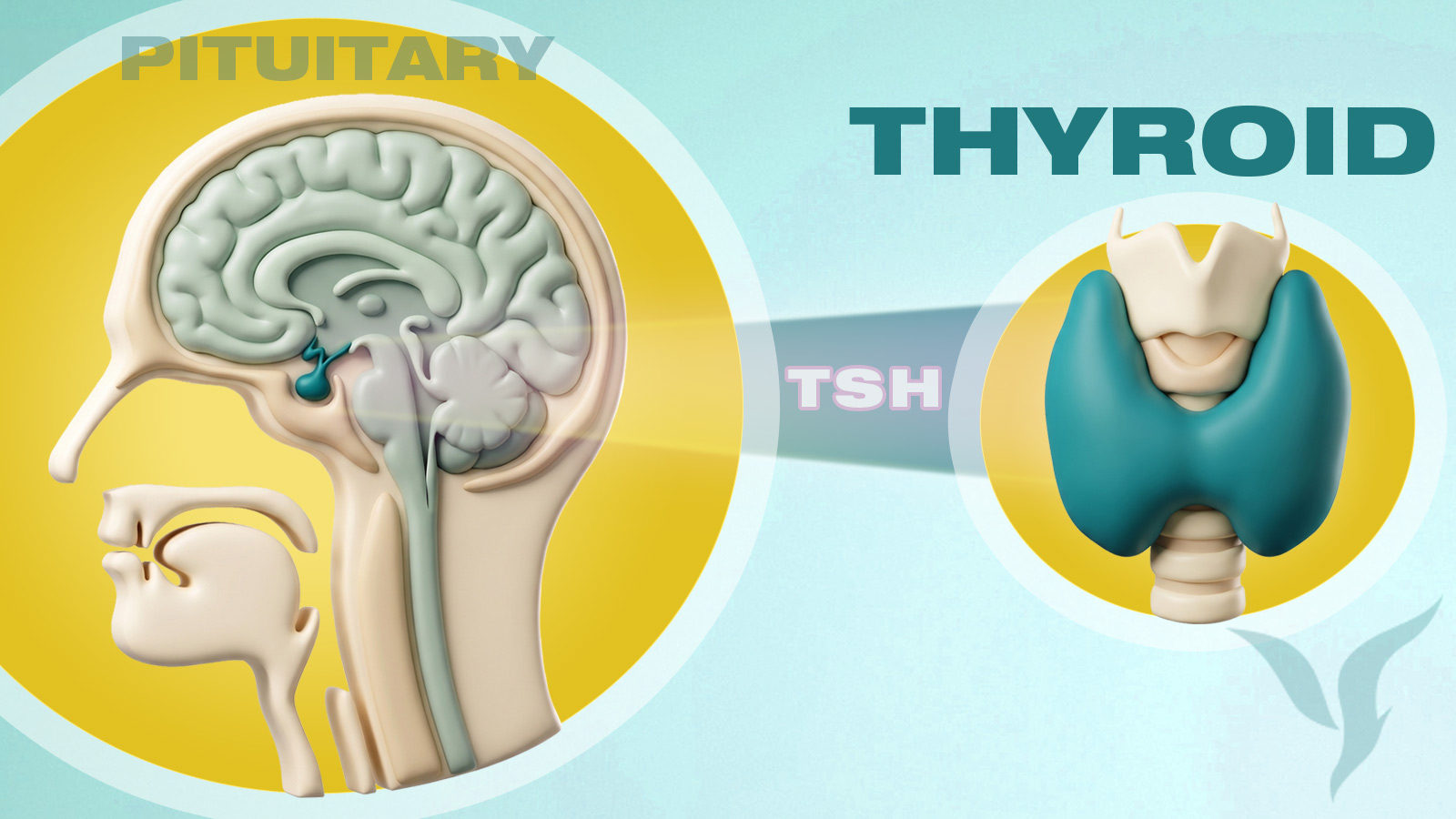
Your TSH Is “Normal.” That Doesn’t Mean Your Thyroid Is Fine.
One number inside a range is not the same sentence as “your thyroid is fine.” What TSH actually measures, why a population range was never able to describe you, and what I look at when the panel comes back normal.

Educational
Why I Don’t Test Cortisol — and What Stress Actually Does to Your Body
A woman came to see me who had already been told what was wrong with her. It was stress — told kindly, by a doctor who meant well, and then she was sent home. It is just stress is not a wrong answer. It is an unfinished one. Here is what a sustained load actually does to sleep, weight, digestion and hormones, and why I read what cortisol touches rather than cortisol itself.

Clinical
IV Nutrient Repletion: What It Can and Can’t Do
A patient asked me for the anti-aging drip she’d seen advertised. I asked her what she was actually tired from — and her ferritin turned out to be low. I say no to more IV requests than I say yes to, and that’s the same reason we offer them at all: an infusion is a medical decision, not an experience.
Subscribe
Get future essays in your inbox.
Clinical perspectives from Dr. Chua and the Meliora team. No spam, no urgency, no nonsense.
Subscribe