
ClinicalEducational
IV Nutrient Repletion: What It Can and Can’t Do
An IV can correct a real deficiency, and when it does, the difference is worth having. It cannot make you younger, and it cannot answer a question nobody has asked yet. Here’s how I decide.


Graphic by Emmanuel Cecilio
A patient came to see me not long ago and asked for the anti-aging drip she had seen advertised. She had done her reading. She knew what she wanted and she was ready to book it.
I asked her something else instead: what are you actually tired from?
She sat with that for a moment and said she wasn’t sure. She had been tired for about two years. She had mentioned it to a doctor, who ran labs and told her everything looked fine. So we ran labs again and read them differently. Her ferritin came back low — not low enough to be called anemia, but low enough to explain most of how she had been feeling.
She did not need an anti-aging drip. She needed iron, and she needed someone to actually look.
I say no to more IV requests than I say yes to. That probably sounds strange coming from a practice that offers them. But the reason we offer them is the same reason I turn most of them down: an IV is a medical decision, not an experience, and it only helps when it is answering a real question.
Is an “anti-aging IV drip” a real thing?
No. I want to be direct about that, because it is the thing people search for most and almost nobody answers it honestly.
There is no infusion that has been shown to slow down aging. Not vitamin C, not NAD+, not glutathione, not any combination of them. What we have are ingredients with genuine roles in the body, marketed with a promise the evidence does not support.
That does not mean people are imagining what they feel afterward. Sitting still for forty-five minutes helps. Being properly hydrated helps, and a surprising number of people are not. Expecting to feel better genuinely does change how you feel — that is real, it is well described, and it is not a criticism of anyone. But none of it is the thing being sold, and none of it lasts.
If you are tired enough to be searching for an IV that reverses aging, something is causing that tiredness. The useful work is finding out what.
What an IV can actually do
There is a real case for infusions, and it is narrower and more interesting than the advertising.
An IV bypasses your gut. That matters when absorption is the actual problem — inflammatory bowel disease, celiac, a history of bariatric surgery, or simply a stomach that cannot tolerate oral iron. In those situations the pills are not failing because the dose is wrong. They are failing because the nutrient is not getting in.
It corrects a measured deficiency faster than oral supplementation can. Low ferritin corrected by infusion comes back in weeks rather than months, and the difference in energy is one of the most reliable improvements I see.
And it can reach concentrations that oral dosing cannot, which is the rationale behind the higher dose protocols. That rationale is real. It is also where the claims tend to outrun the evidence, and where I am most careful about what I promise.
What it can’t do, and when I say no
An IV cannot treat a deficiency you do not have. Most vitamins in these infusions are water-soluble, so when your levels are already adequate your kidneys clear the excess within hours. You produce expensive urine and feel briefly refreshed. That is the honest mechanism.
It cannot fix a diet either — nutrients arriving by vein do not change what happens the other six days of the week — and it cannot make anything last on its own. Repletion is a starting point. What keeps you feeling well is the plan that follows it.
So I say no when nothing has been tested, because I would be guessing. I say no when the labs are normal and the request is really about fatigue that has never been properly worked up; that patient deserves an investigation, not an infusion. I say no when an infusion would stand in for addressing sleep, or thyroid, or a diet that is not supporting someone, because then I am selling relief from a symptom while the cause goes untouched. I say no when the goal is cosmetic and the mechanism does not exist. And I say no when a protocol is not appropriate for someone’s kidney function, heart function, or medication list — screening for that is not a formality.
Saying no costs us a booking. It is also the entire reason to trust the times I say yes.
What we actually offer
We keep a defined menu rather than an open bar. There are four infusions, and the detail on each one is on the service page.
Two are directed by your labs: Iron Flow, which requires a current ferritin before I will order it and a recheck afterward, and Repletion Flow, which is mixed in proportions adjusted to you rather than to a fixed recipe.
Two are chosen for a situation rather than for a number: Feel Better Flow, for an active cold or flu and most useful during the illness rather than as insurance against one, and NAD Flow, where the interest is legitimate and the human evidence is still thin.
Nothing on that list is there for a cosmetic reason. That is deliberate — if I cannot tell you the mechanism, I would rather not offer it.
All four are for established patients only. I am not willing to put a line in someone’s arm without knowing their labs, their history and their medication list.
How we decide: test first
Nutrient repletion is one of the five pillars of the Meliora Method, and the sequence is always the same. We look before we treat.
That usually means a full iron picture rather than a single hemoglobin — ferritin included, because ferritin falls long before anemia appears and it is the number most often skipped. It means B12 and vitamin D, a thyroid panel read properly rather than a lone TSH, and the context: your history, your medications, what you eat, how you sleep. It is the same reason we read every number against what is optimal rather than merely normal.
Then we decide. Sometimes the answer is an infusion. More often it is oral repletion, a change in how you take something you already have, or a conversation about something else entirely. When an infusion is right, we recheck afterward, because a treatment nobody measures is a treatment nobody can learn from.
If you have been considering an IV, the question worth asking first is not which one. It is what you are actually tired from — and whether anyone has looked properly.
That is the part we are good at. If you would like us to look, you can start here.
Dr. Rowena Chua is the founder of Meliora Integrative Medicine in Evanston, IL and is triple board-certified in Neurology, Integrative Medicine, and Obesity Medicine. A longtime Evanston physician, she specializes in hormonal, metabolic, and neurological health.
Educational only. This article explains physiology; it is not medical advice, a diagnosis, or a treatment plan, and it cannot account for your own history, medications or results. For guidance specific to you, please speak with your physician.
Semper ad Meliora.
Always toward the pursuit of better.
Work with Meliora
Wondering what this looks like for you?
If something here resonated, we'd be glad to help you look at your own picture — your labs, your history, the whole system. That's the heart of how we practice.
Start hereMore from Meliora
Clinical
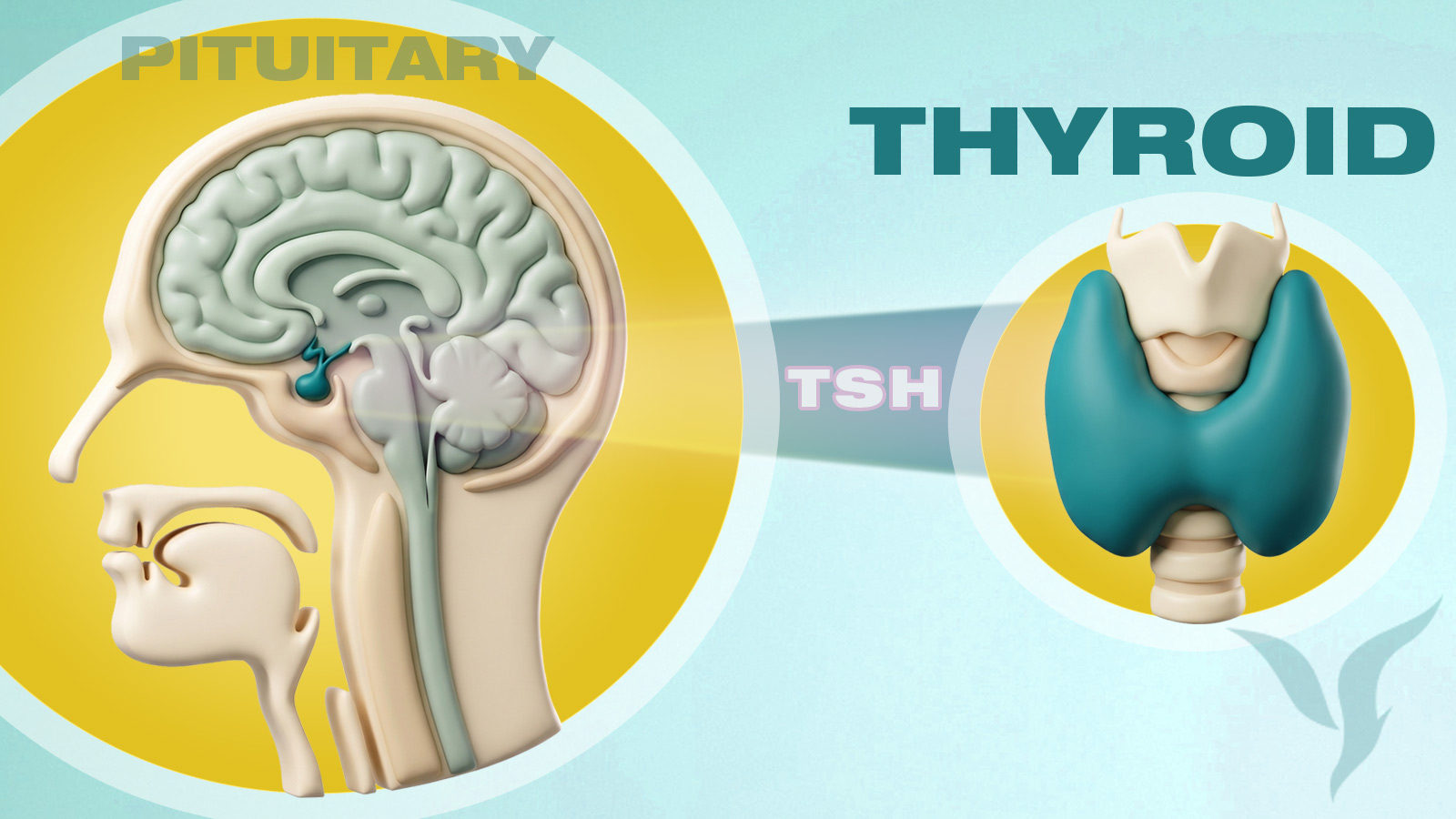
Your TSH Is “Normal.” That Doesn’t Mean Your Thyroid Is Fine.
One number inside a range is not the same sentence as “your thyroid is fine.” What TSH actually measures, why a population range was never able to describe you, and what I look at when the panel comes back normal.

Educational
Why I Don’t Test Cortisol — and What Stress Actually Does to Your Body
A woman came to see me who had already been told what was wrong with her. It was stress — told kindly, by a doctor who meant well, and then she was sent home. It is just stress is not a wrong answer. It is an unfinished one. Here is what a sustained load actually does to sleep, weight, digestion and hormones, and why I read what cortisol touches rather than cortisol itself.

Practice
Why We Teach You Your Own Physiology
Most medicine hands you a conclusion and sends you home. We do the opposite — we teach you how your own body works, read as one connected system across five pillars, because a patient who understands her own physiology makes better decisions every day than any single appointment can. Here’s what that actually looks like.
Subscribe
Get future essays in your inbox.
Clinical perspectives from Dr. Chua and the Meliora team. No spam, no urgency, no nonsense.
Subscribe