
ClinicalEducational
Is Hormone Therapy Safe? What Has Changed Since 2002.
The 2002 study shaped how a generation of women saw hormone therapy. More than twenty years later, newer evidence and a revised FDA label give a clearer picture of the risks and benefits.
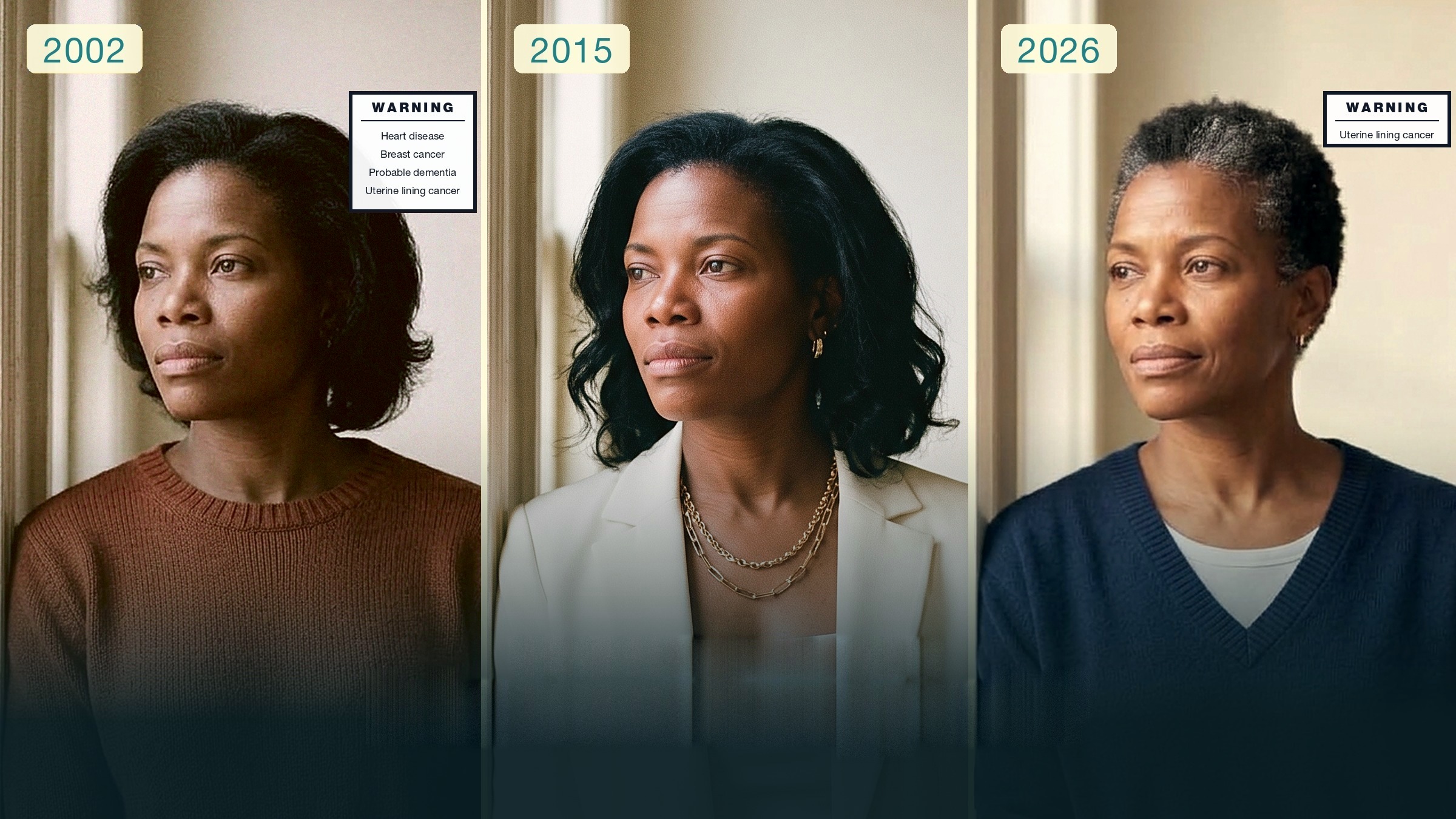
She was fifty-two, and she had been having hot flashes for three years. She was waking two or three times a night, her joints ached in the mornings, and she had started losing words in the middle of sentences at work. When I mentioned hormone therapy, she shook her head before I had finished. Her mother had stopped hers in the summer of 2002, the week the news came out, and the family had treated hormones as dangerous ever since.
Many women I see carry some version of that summer with them. It is worth understanding what happened, because the picture today looks very different, and in the past year the official labeling has begun to catch up with it.
What the 2002 study found
The Women's Health Initiative was a very large, carefully run trial, and it asked an important question: should women take hormones for years after menopause to prevent heart disease? In July 2002, the part of the trial testing combined estrogen and progestin was stopped early. Women taking hormones had more breast cancer, more heart attacks, more strokes and more blood clots than women taking a placebo. The results were reported everywhere, and within a year or two, hormone therapy use in the United States had fallen by about half. Medicine as a whole stepped back from it, and for most of the next twenty years, women were offered it reluctantly, if at all.
What was reported less widely was who was in the trial and what they took. The average participant was sixty-three, and most were more than ten years past their final period. Many had no symptoms, because the trial was about prevention, not relief. They took one particular combination: conjugated equine estrogens, an oral estrogen made from horses, and medroxyprogesterone acetate, a synthetic progestin. And the women in the estrogen-only part of the trial, who had had hysterectomies, did not show the increase in breast cancer at all.
Figure 1 — Who the 2002 trial studied, and who is asking today
The 2002 trial
Age. Average sixty-three, most more than ten years past their final period
Symptoms. Many had none. The trial was about prevention, not relief
Estrogen. Conjugated equine estrogens, made from horses, by mouth
Progestogen. Medroxyprogesterone acetate, a synthetic progestin
Where the benefit is clearest today
Age. Under sixty, or within ten years of the final period
Symptoms. Hot flashes, night sweats, poor sleep
Estrogen. Options include estradiol, by mouth or through the skin
Progestogen. Options include micronized progesterone
In the estrogen-only part of the same trial, in women who had had hysterectomies, there was no increase in breast cancer.
What we understand now
Over the following twenty years, researchers went back to the same data and added new studies, and the risks turned out to depend a great deal on three things: when a woman starts, which hormones she takes, and how they enter the body.
Figure 2 — What matters when considering hormone therapy
When treatment begins
For most healthy women with symptoms, under sixty or within ten years of their final period, the balance of benefit and risk is favorable.
Which hormones are used
Risks vary by formulation. Micronized progesterone may be gentler on the breast than certain synthetic progestins.
How estrogen is delivered
Estrogen through the skin may carry a lower risk of blood clots than estrogen taken as a pill.
The 2002 trial tested one combination, by mouth, mostly in women in their sixties. Most of what women hear about hormone therapy still comes from that one combination.
Timing matters most. For healthy women with symptoms who start hormone therapy before sixty, or within ten years of their final period, the benefits generally outweigh the risks. That is the position of The Menopause Society, and it is the group the 2002 trial mostly left out. Starting much later, in a body whose blood vessels have already aged without estrogen, carries more risk, which is part of what the original trial was measuring.
Figure 3 — Where the benefit is clearest, and where the 2002 trial looked
The hormones themselves matter. Estradiol is the same estrogen your ovaries made for most of your life, and micronized progesterone is the same molecule as the progesterone your body made. That is what bioidentical means: the molecule matches your own. Most bioidentical hormones, including the FDA-approved ones, are made in a lab, often starting from a plant compound. Being bioidentical does not make a hormone safe on its own. The dose, the route, when you start and your own health history matter more. If you still have your uterus and take estrogen for the whole body, you also need a progestogen, usually micronized progesterone, because estrogen on its own thickens the lining of the uterus and the progestogen protects it.
The route matters. Estrogen taken as a pill passes through the liver first, and that is where the increase in clotting comes from. Estrogen absorbed through the skin, as a patch or a gel, avoids that first pass. Observational studies suggest it carries a lower risk of blood clots than oral estrogen, which is why the route is one of the first things I think about when tailoring treatment.
Breast cancer is the question women ask me most. In the 2002 trial, combined estrogen and synthetic progestin was linked to a higher risk, particularly with longer use. More recent studies suggest that micronized progesterone may be gentler on the breast, although those studies are observational and we do not yet have long-term randomized trials to confirm it. In the estrogen-only part of the trial, there was no increase in breast cancer. These differences matter, and so does your own personal and family history, which is why it is a conversation we have in detail before anything is prescribed.
What the FDA changed
For more than twenty years, every box of estrogen carried a boxed warning, the strongest kind the FDA uses, built largely on the 2002 results. In November 2025 the FDA began changing that labeling, and in February 2026 it approved the first revised labels, which take heart disease, breast cancer and probable dementia out of the boxed warning. On the revised labels, the boxed warning that stays is about the uterus: estrogen taken alone for the whole body raises the risk of cancer of the uterine lining in a woman who still has her uterus, which is why she needs a progestogen with it.
Figure 4 — What changed in the boxed warning
Taken out of the boxed warning
Heart disease
Breast cancer
Probable dementia
Still in the boxed warning
Cancer of the uterine lining
With estrogen taken alone for the whole body, in a woman who still has her uterus. A progestogen taken with it protects the lining.
November 2025: the FDA began changing the labeling. February 2026: the first revised labels. Heart and breast cancer risk information is still in the prescribing information.
This does not mean hormone therapy is free of risk. Information about heart and breast cancer risk is still in the prescribing information, where it belongs. What changed is that the most prominent warning on the box now matches what the research has shown for some time, and a woman reading it gets a fairer picture than her mother did. Whether hormone therapy is right for a particular woman is still a decision made with her own history in front of us.
What it can do
Hormone therapy remains the most effective treatment we have for hot flashes and night sweats. It usually helps sleep, partly by ending the night sweats that break it. Many women find their mood steadier and their joints less achy. Estrogen also slows the bone loss that speeds up around the final period, which I wrote about recently in what a DEXA scan can show.
Vaginal estrogen deserves its own mention, because many women avoid it out of the same fear. Vaginal dryness, pain with intercourse and recurring urinary symptoms often respond well to a low dose of estrogen applied locally. At those low doses very little reaches the bloodstream, and it does not generally need a progestogen alongside it to protect the uterus. It is a different conversation from hormone therapy for the whole body, and for many women an easier one.
Figure 5 — Two different conversations
Hormone therapy for the whole body
For. Hot flashes and night sweats, sleep, mood, achy joints, and slowing bone loss
Bloodstream. It is meant to reach it. That is how it works
With a uterus. A progestogen is needed alongside the estrogen
Low-dose vaginal estrogen
For. Vaginal dryness, pain with intercourse, recurring urinary symptoms
Bloodstream. Very little reaches it, at those low doses
With a uterus. A progestogen is not generally needed
As a neurologist, I pay particular attention to the brain fog, the lost words and the migraines that change pattern in these years. Estrogen is active throughout the brain, and when its levels swing, it can affect sleep, mood and how clearly a woman thinks. Some women notice their thinking improve on hormone therapy, often as their sleep and hot flashes improve. It is not a treatment to prevent dementia, and I would not start it for that reason.
Who should avoid it
Some women should avoid hormone therapy for the whole body: those with a history of breast cancer, coronary heart disease, a prior blood clot or stroke, active liver disease, or unexplained vaginal bleeding that has not yet been investigated. For some women with other risk factors, it can still be an option with the right preparation and closer monitoring. And some women simply prefer not to take hormones. There are effective non-hormonal treatments for hot flashes and sleep, and those deserve the same careful discussion.
How I approach it
Before we talk about treatment, I want the whole picture: a timeline of your symptoms, your menstrual history, your personal and family history, your heart and blood pressure risk factors, and whether your breast screening is up to date. Laboratory testing, read in context, can help identify other conditions that overlap with the transition. An underactive thyroid, for one, can look a great deal like it.
From there, the choice of whether to treat, with what, and by which route is one we make together, based on your symptoms, your risks and what matters to you. Once you start, we follow how you feel and recheck at intervals, and we adjust. Most women stay on hormone therapy for as long as the benefits outweigh the risks for them, and there is no fixed point at which everyone has to stop. That is a decision we revisit together each year.
The woman at the start of this piece took some time to think about it. When she came back, she wanted to try. Three months later she was sleeping through most nights, and the hot flashes had faded to a few a week. What she told me she had noticed most was that she had stopped losing words.
If the headlines from 2002 are part of why you have been putting up with symptoms, it is worth looking at your own situation with what we know now. Hormone therapy is one of the things we can talk through, whenever you are ready.
The case described here is a composite. Dr. Rowena Chua is the founder of Meliora Integrative Medicine in Evanston, IL. She is triple board-certified in Neurology, Integrative Medicine, and Obesity Medicine, and a Menopause Society Certified Practitioner (MSCP). A longtime Evanston physician, she specializes in hormonal, metabolic, and neurological health.
Educational only. This article explains physiology; it is not medical advice, a diagnosis, or a treatment plan, and it cannot account for your own history, medications or results. For guidance specific to you, please speak with your physician.
Semper ad Meliora.
Always toward the pursuit of better.
Work with Meliora
Wondering what this looks like for you?
If something here resonated, we'd be glad to help you look at your own picture — your labs, your history, the whole system. That's the heart of how we practice.
Start hereIn Evanston, Illinois — and by video in all 50 states and DC.
Learn it yourself
The Meliora Academy
Dr. Chua teaching the Method in six modules, including Module 02 — Your Hormones Explained, on what each hormone does, and why balance beats levels. No appointment, no geography. It is in production now.
Join the waitlistMore from Meliora

Clinical
Your Weight Hasn't Changed in Years. Here Is What a DEXA Scan Can Show.
A body can rearrange itself a great deal underneath a weight that stays the same. A DEXA scan shows the three things a scale adds together: fat, muscle and bone.
Practice
Your Labs Came Back Normal. Here Is What I Do Next.
Most people have had blood drawn and been told it looked fine. What almost nobody is told is what happened in between, and that part is most of the work.

Practice
Functional Medicine or Integrative Medicine? What to Ask Before You Choose a Doctor
A man came to see me because his wife made the appointment. She had found three practices while looking for someone who would take a proper look at him. One called itself functional medicine. One called itself integrative medicine. The third said holistic.
Subscribe
Get future essays in your inbox.
Clinical perspectives from Dr. Chua and the Meliora team. No spam, no urgency, no nonsense.
Subscribe