
PracticeEducational
Are You in the Right Physiologic State to Thrive?
Before asking what to do for your health, it helps to ask what state your body is in. The same day can feel very different depending on the answer, and that state is something we can work with.

Many people who come to see me for the first time have already been working hard on their health. They have changed how they eat, bought the supplements, set an alarm for the gym and read more about their health than I could ever assign. What brings them in is that the effort has stopped matching the result. They are tired by mid-afternoon, foggy in meetings and shorter with the people they love than they want to be, and many have quietly begun to wonder whether the problem is them.
I usually start somewhere else. Before we talk about what to add, I want to know what state the body is in, because that state shapes how everything else lands.
What I mean by physiologic state
Your physiologic state is the condition your body is operating in at a given time: how rested it is, how steady its blood sugar is, where its hormones are, how well nourished it is, and how settled or alert its nervous system is. It shifts over the course of a day, and over the course of years.
The same circumstances land differently depending on that state. A full inbox, a child who needs you at bedtime, a difficult conversation: after a good night’s sleep and a steady day, most people handle these well. After a week of poor sleep, with blood sugar swinging and iron running low, the same evening can feel overwhelming. The circumstances are the same. The body meeting them is different.
Figure 1 — The same evening, two states
After a good night’s sleep and a steady day
A full inbox
A child who needs you at bedtime
A difficult conversation
Most people handle these well.
After a week of poor sleep
With blood sugar swinging and iron running low.
A full inbox
A child who needs you at bedtime
A difficult conversation
The same evening can feel overwhelming.
The circumstances are the same. The body meeting them is different.
This is why I read exhaustion, brain fog and a short fuse as information. They can reflect underlying imbalances in the body, and many of those are things we can evaluate, understand and often improve.
The conditions a body needs
The Meliora Method is organized around five pillars, and one useful way to think about them is as the conditions a body needs in order to be in a good state.
Figure 2 — Five conditions for a good physiologic state
Hormone Rebalancing
Hormones influence energy, metabolism, sleep, mood and overall well-being.
Nutrient Repletion
Vitamins, minerals and other nutrients support how cells function and how the body produces energy.
Gut & Detoxification Optimization
Digestion, nutrient absorption, the balance of the gut microbiome, and the body’s natural detoxification processes.
Stress & Nervous System Regulation
The body’s ability to respond to stress, and then return to recovery and balance.
Metabolic & Mitochondrial Support
Metabolic health and the energy each cell produces, which together support steady energy and resilience.
Each condition supports the others. Imbalances in one can compound imbalances in the rest.
When several of these are off at once, which is common, the imbalances can compound one another and make recovery more difficult. Much of what we do in the first months of care is restoring these conditions, so that the effort a person is already making has somewhere to land. When poor sleep or low levels of nutrients such as iron, B12 or vitamin D are part of the picture, someone whose sleep and nutrient levels are restored often finds that the exercise they were forcing themselves through starts to feel possible again.
The nervous system sets the tone
Of the five, the nervous system is the one people feel most directly. The autonomic nervous system helps regulate how the body responds to changing demands. Sympathetic activity prepares us for action and stress, while parasympathetic activity supports digestion, recovery and restoration. Both are essential, and their relative activity changes continuously in response to the body’s needs. What matters is the body’s ability to adapt to what the day asks of it and to recover afterward. When the body experiences prolonged stress without adequate recovery, sleep, digestion, blood sugar regulation and emotional well-being can all be affected. I wrote about this in my article on stress.
Figure 3 — Two branches of the autonomic nervous system
Sympathetic: action and stress
Prepares the body to meet a demand, from a deadline to a sudden noise.
Parasympathetic: recovery and restoration
Supports digestion, recovery and repair once the demand has passed.
Both are essential. What matters is adapting to what the day asks, and recovering afterward.
The same evening, twice
Illustrative · drag across the evening
One way to gain insight into this is heart rate variability, or HRV, the small variation in the time between heartbeats that many watches and rings now report. Higher HRV is often associated with greater autonomic flexibility and recovery capacity, although values vary considerably between individuals and must be interpreted in context. Because HRV is influenced by sleep, illness, alcohol, physical activity and other factors, the trend over weeks tells you more than a single night’s number.
It works in both directions
Physiology shapes how we experience life, but how we experience and respond to life can also influence our physiology. Our thoughts, emotions and responses to everyday experiences can affect stress levels, sleep and overall well-being.
One practice I believe deserves more attention is gratitude. Gratitude does not necessarily change our circumstances, but it can change how we experience them. Research suggests that gratitude practices may offer modest improvements in mood and psychological well-being, with some studies also reporting benefits for sleep. Although research on its direct effects on the nervous system is still evolving, I see gratitude as a simple, meaningful way to support emotional resilience alongside the other aspects of health.
One way to begin is by taking a few moments each evening to reflect on three specific things you are grateful for. They do not have to be extraordinary: a meaningful conversation, a quiet walk or a small act of kindness can be enough. The intention is to become more aware of the positive moments that can easily go unnoticed in a busy life.
Figure 4 — A simple evening practice
Take a few moments at the end of the day.
Reflect on three specific things you are grateful for: a meaningful conversation, a quiet walk, a small act of kindness.
Notice the positive moments that can easily go unnoticed in a busy life.
A simple practice. It sits alongside the other aspects of health.
This week, many families will gather around the Thanksgiving table and share what they are grateful for. It is a meaningful tradition, and gratitude does not have to be reserved for special occasions. It can become a simple practice woven into everyday life.
The goal is resilience
The aim is a body that recovers well, rather than a perfect state that never changes. Everyone has hard weeks, short nights and seasons of strain. A resilient body moves into stress when it needs to, comes back out of it, and recovers more easily when the conditions underneath it are in place.
Health, in this sense, is an internal environment that supports the life you want to live. When those conditions are restored, the same life often feels different: more energy for the people you love, more patience in the hard moments, and more room for what matters to you.
If you have been working hard and the effort is not yet showing up in how you feel, it may help to look at the state your body is in first. Understanding the whole person and the underlying physiologic factors that influence how they feel and function is where the Meliora Method begins.
Dr. Rowena Chua is the founder of Meliora Integrative Medicine in Evanston, IL and is triple board-certified in Neurology, Integrative Medicine, and Obesity Medicine. A longtime Evanston physician, she specializes in hormonal, metabolic, and neurological health.
Educational only. This article explains physiology; it is not medical advice, a diagnosis, or a treatment plan, and it cannot account for your own history, medications or results. For guidance specific to you, please speak with your physician.
Semper ad Meliora.
Always toward the pursuit of better.
Work with Meliora
Wondering what this looks like for you?
If something here resonated, we'd be glad to help you look at your own picture — your labs, your history, the whole system. That's the heart of how we practice.
Start hereIn Evanston, Illinois — and by video in all 50 states and DC.
Learn it yourself
The Meliora Academy
Dr. Chua teaching the Method in six modules, including Module 03 — The Nervous System & Hormonal Health, on the brain-body-hormone connection. No appointment, no geography. It is in production now.
Join the waitlistMore from Meliora
Clinical
Before a Sugar Detox, Know Your Fasting Insulin.
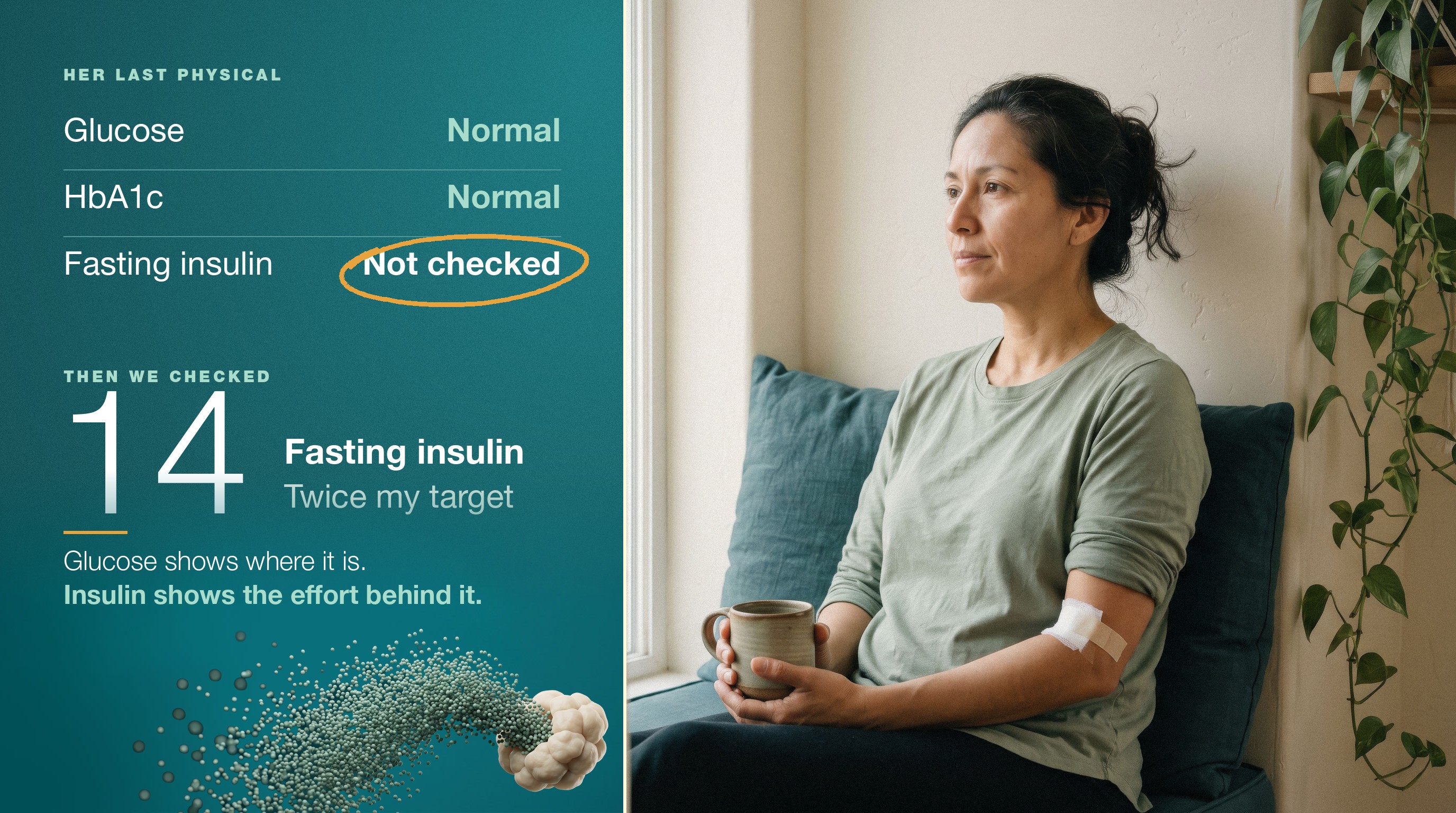
A sugar detox can help you feel better within weeks. Fasting insulin shows how hard your body is working to keep blood sugar normal, often before glucose itself changes.

Clinical
Your Thyroid Antibodies Are Positive. Here Is What I Do Next.
Positive TPO antibodies with a normal TSH usually means Hashimoto’s, years before the thyroid slows. Here is how I use those years: the gut, the immune system, and what I watch over time.

Clinical
Is Hormone Therapy Safe? What Has Changed Since 2002.
Most of what women hear about hormone therapy still comes from one trial in 2002. The risks turned out to depend on when you start, which hormones you take and how they enter the body, and the FDA has begun revising the label.
Subscribe
Get future essays in your inbox.
Clinical perspectives from Dr. Chua and the Meliora team. No spam, no urgency, no nonsense.
Subscribe